
 standing desk “/>
You’ve likely heard the new adage “sitting is the new smoking,” and there’s definitely some truth to it. We’re not made to spend most of our time sitting down at our desk jobs. Prolonged sitting and taking up a poor posture with minimal physical activity can lead to many health problems. What’s more, it can often cause the worsening of existing issues like back pain.
Quitting your job to pursue a career that’s healthier for your back is probably a bad decision, but that doesn’t mean you should just accept your fate and keep living in pain. One possible answer that can help you is simply switching from traditional desks to increasingly popular standing desks.
Now, they aren’t a cure-all, but standing desks have many benefits. Let’s explore those benefits, take a look at some of the limitations, and learn about the best tips for using these desks. Most importantly, let’s answer a simple question – does a standing desk help with back pain?
Sedentary Lifestyle and Back Pain: Is There Any Correlation?
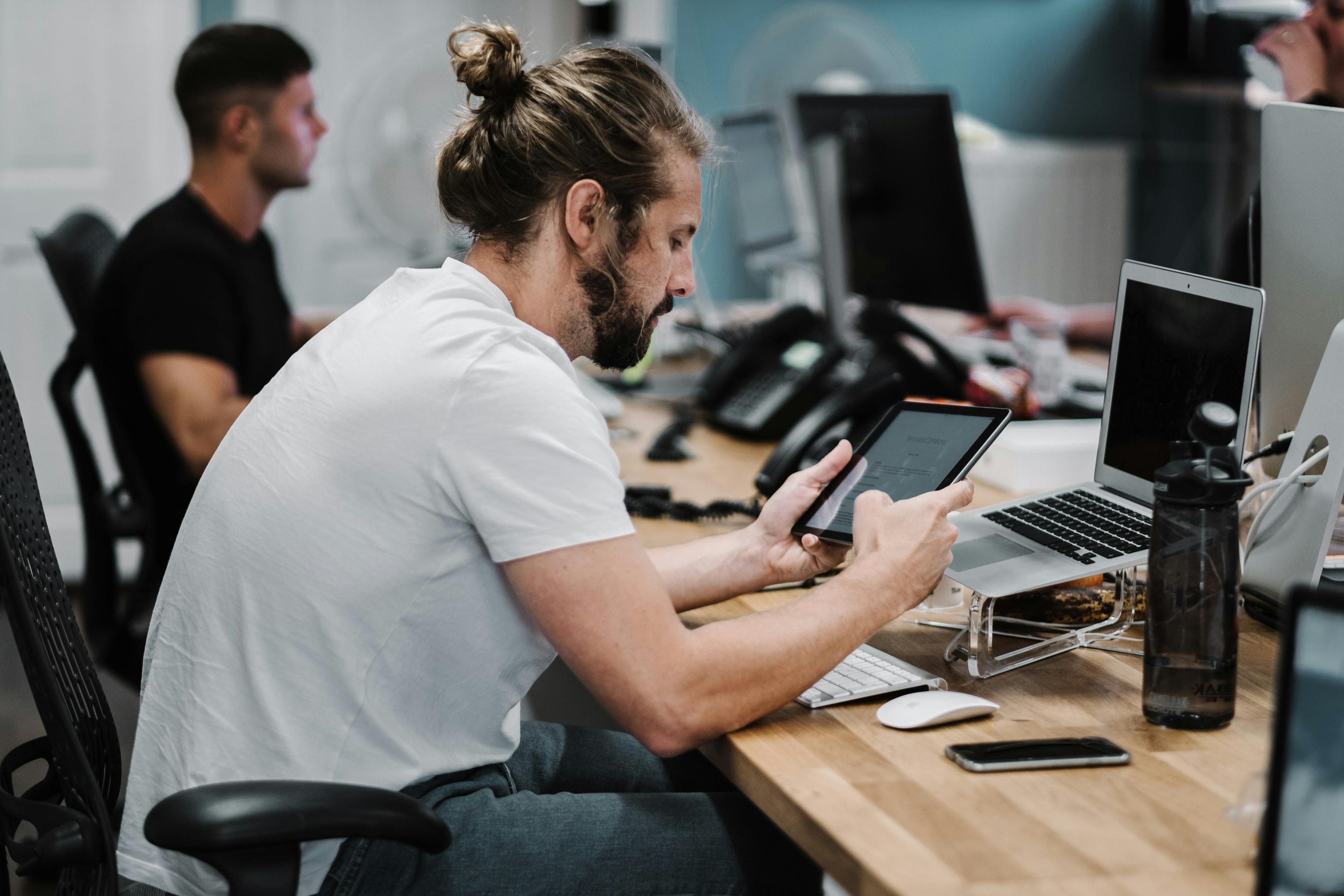
It’s no secret that a sedentary lifestyle is bad for your health. You burn fewer calories when you stay seated most of your day. Your muscles weaken. Even your bones may start losing some of their mineral content.
It’s especially prolonged sitting without any movement (that frequently comes with desk work) that can lead to a variety of health problems, from deep vein thrombosis to cardiovascular disease.
Though everyone can experience different side effects, the most common first signs that you need to introduce a bit more activity in your daily life are neck pain, foot pain, and lower back pain.
When you’re seated, and when you’re seated with a poor posture, in particular, you increase the load on your spinal discs. Over time, as this pressure keeps affecting your discs, they can slip out of place, pinch the surrounding nerves, and herniate.
To prevent this from happening and to possibly get some pain relief if it’s already a problem, you’ll want to introduce more movement and try and adopt a neutral position while doing computer work or simply sitting at your desk. Avoid hunching over, crossing your legs, or slouching in your chair.
Can Standing Desks Help With Reducing Back Pain?

So, sitting is bad for you, but is standing throughout the day instead a better alternative? Does using a standing desk offer any pain relief for back issues?
Though these questions are simple enough, the answers are somewhat complicated since it all hinges on using the standing desk properly.
The Benefits of Using Standing Desks
Using a standing desk or a sit-and-stand desk is one of the ways in which you can offset the negative effects of spending prolonged periods of time sitting.
By allowing you to stay upright, they encourage you to adopt a good posture and lessen the pressure on your spinal discs. They reduce the overall strain on your back and neck, which can help you prevent back pain from becoming chronic.
What’s more, they push you to change positions more frequently. After all, you’ve likely noticed that you can’t spend long periods in one position when you’re standing. Your body almost forces you to move more when you’re standing upright, which can help you avoid back and neck stiffness.
However, pain relief isn’t the only benefit of switching to a standing desk.
As mentioned, leading a sedentary lifestyle can lead to numerous health-related issues. A simple change from spending most of your time sitting to standing upright can help you:
- Avoid weight gain: Though the difference is small, your body burns more calories when standing instead of sitting. This minor change can be a big help in your weight loss journey;
- Improve blood flow: With a sedentary lifestyle, your chances of having issues with increased blood pressure are higher. When standing, your circulatory system needs to work harder to fight the effects of gravity, which means your overall blood flow can improve and your blood pressure can decrease;
- Lower blood sugar levels: Staying on your feet after meals can stabilize your blood sugar and help you avoid unnecessary spikes;
- Reduce risks of cardiovascular disease: Studies suggest that a prolonged sedentary lifestyle can increase the risks of cardiovascular mortality by 90%, and staying on your feet can help offset that;
- Increase productivity: Perhaps surprisingly, standing can help you feel more focused and productive. You’ll have a more dynamic work environment that can help keep you active and engaged.
Of course, simply using a standing desk occasionally won’t replace your need for additional physical activity, but it’s a good start to improving your overall health.
A Word of Warning
The entire point of a standing desk is to avoid sitting without moving for long periods. However, prolonged standing isn’t a viable alternative by itself.
If you’re using a standing desk improperly and without a cushioned mat, there are some potential risks you could face, including foot pain and discomfort. If you don’t have a good posture, you could have further issues with back pain.
Moreover, standing for long hours without moving can lead to varicose veins, fatigue, and more.
So, you’ll want to be careful. You’ll want to improve your posture and ensure that you have enough physical activity in your daily life for the best effects.
How to Get the Most out of a Standing Desk and Reduce Back Pain
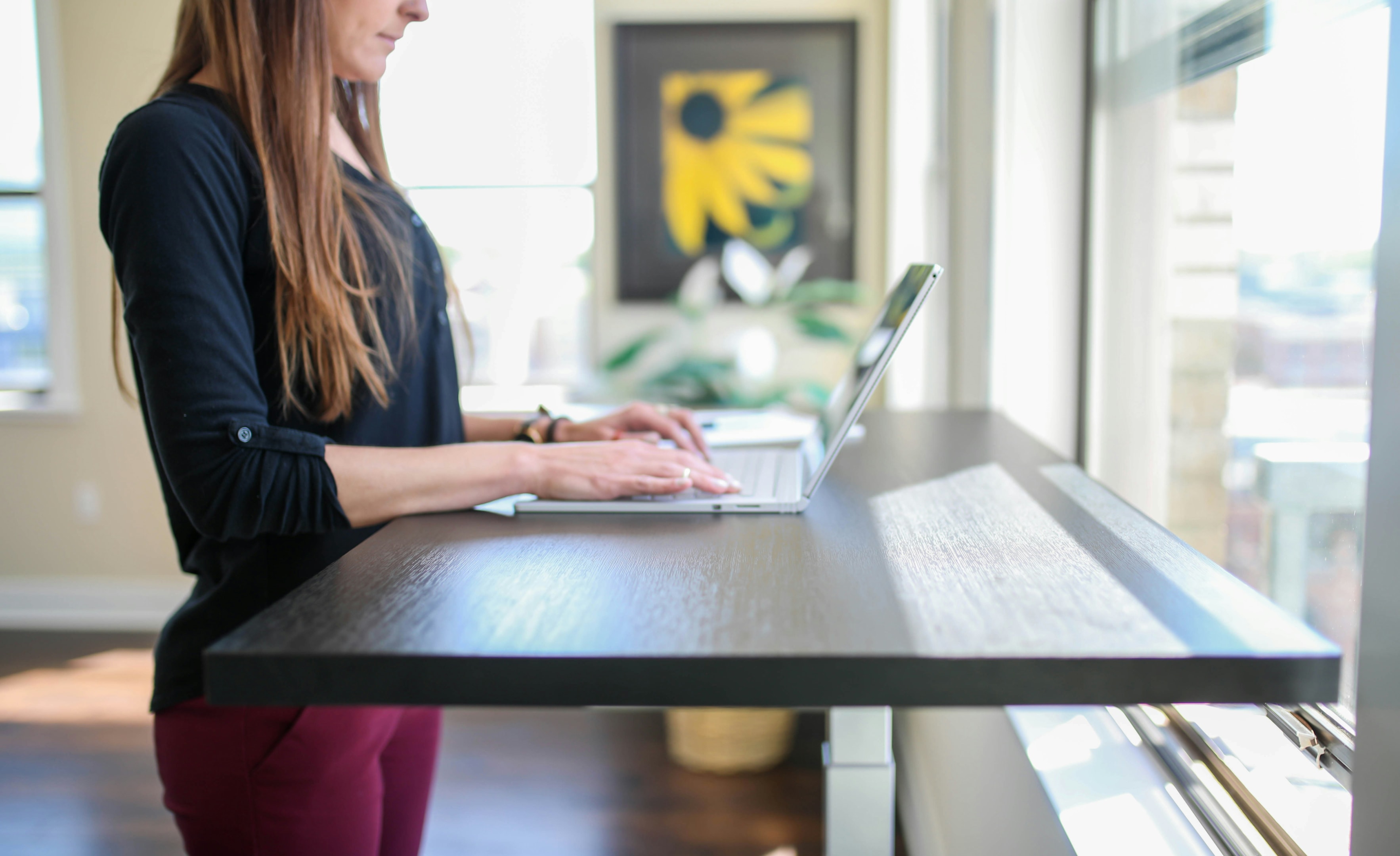
To alleviate back pain with the help of a standing desk most efficiently, there are a few things you’ll want to keep in mind.
Adjust the Height
The first and most important thing you’ll want to pay attention to is your desk’s height. As a general rule of thumb, at the appropriate height, your sit-stand desk will keep your computer monitor at eye level while letting you rest your arms at a 90-degree angle.
With your computer screen at the right distance and height, you’ll find it easier to maintain a neutral position, though you’ll still have to be focused on keeping a good posture, your back straight, and your shoulders relaxed.
Get Moving
As mentioned, prolonged standing isn’t all that much better than prolonged sitting. You could still have issues with back and neck stiffness and tension, among other things. So, you’ll want to incorporate movement and some physical activity.
Remember to alternate between sitting and standing every hour or so, stretch, and take a brisk walk to alleviate pressure and stay in good condition.
Use Additional Accessories
If you’re going to use a sit-stand desk for hours at a time, you’ll need additional accessories, a good standing mat being the most important one. A cushioned mat helps provide more support and removes pressure from your feet, helping to improve your overall comfort while standing.
In addition to the mat, you’ll also want an ergonomic office chair. After all, you probably won’t be able to stand upright and look straight ahead at your monitor for eight hours a day. You’ll probably spend hours alternating between standing and sitting and want to feel comfortable and supported in both positions.
FAQ
Can I completely alleviate back pain by using a standing desk?
Unfortunately, a standing desk isn’t a cure for back pain. It can help improve your posture, alleviate pressure, and reduce strain on your back, neck, and shoulders. However, by itself, it can only work as a minor pain relief. For the best effect, you’ll also want to incorporate physical activity and adopt healthy ergonomic practices every day.
How long should I stay standing to alleviate back pain with a standing desk?
At first, standing for 15 minutes to half an hour every hour can help you alleviate back pain. You can increase the time spent standing over the course of several weeks, but always make sure to alternate between sitting and standing frequently and take short, brief walks whenever you can.
Is a standing mat necessary when using a standing desk?
While not absolutely necessary, a standing mat can be exceptionally beneficial. It will offer some extra cushioning and help alleviate pressure from your feet, thus reducing your chances of developing foot pain.
Are there any other benefits of using a standing desk?
Using sit-and-stand desks can offer many benefits, including improving blood flow, stabilizing blood glucose levels, reducing blood pressure, minimizing weight gain risks, increasing productivity, and helping you fight the negative effects of prolonged sitting.
Take a Stand and Alleviate Back Pain
While it isn’t a cure, a standing desk can help you alleviate back pain. It promotes good posture, alleviates the pressure from your spinal discs, and encourages you to move more. It reduces the overall strain and stiffness you feel after long periods of sitting.
However, the key is using the desk right. You’ll want to pay attention to its height, get additional support in the form of cushioned mats and ergonomic chairs, and make sure to incorporate as much physical activity in your daily life as possible.
If you’re interested in alleviating back pain and improving your overall health in the office, visit OffiSavvy and browse through our collection of standing desks, ergonomic furniture, and office accessories designed for maximum comfort. Create a workspace that keeps you healthy and productive around the clock.
Looking for Office Furniture in San Diego?
Visit the Offisavvy showroom at 7668 Miramar Rd., Suite B, San Diego, CA 92126 — we carry new and used office furniture including ergonomic chairs, standing desks, cubicles, and more. Call 858-727-5444 or request a quote online.
Shop Standing Desks in San Diego Browse All Used Furniture →


